09/08/26
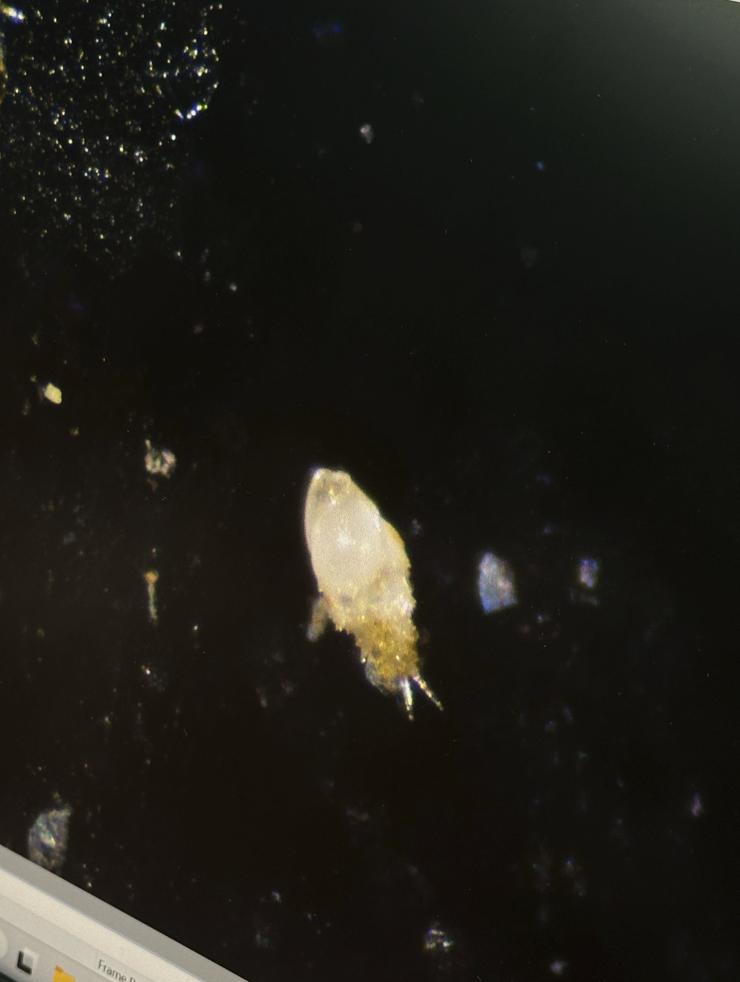
A live (we are pretty sure) foraminifera, Bulimina spp.
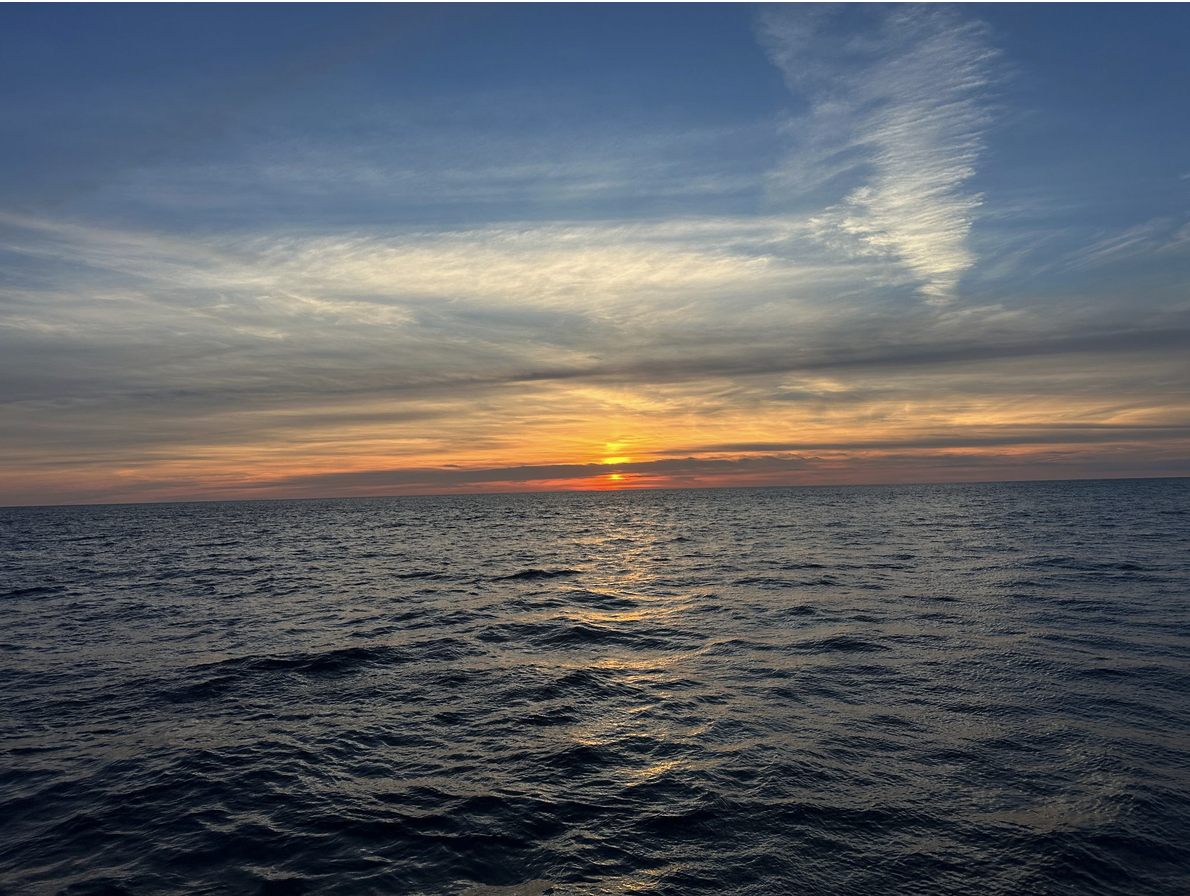
SUNSET BREAK!
Today we had to start processing all the mud we collected over the past two days. We first focus on the top 6cm of each core to see if we can find any live foraminifera. We found a couple, but not nearly as many as we would have liked. It is really challenging to tell if the benthic foraminifera are living without using dye to test for live tissues. Unfortunately, we couldn’t stain the samples because that could interfere with the microbiology they were planning on performing on these specimens. Sometimes little inside bits will stick out of the shells and be more orange in color. Sometimes you can see the tissue through the shells.
We were also examining the samples for benthic foraminifera of the class Milliolida. These tests are known to be good tracers of methane seepage, which is what we are interested in! We are coring along the U.S. Atlantic Margin (USAM) looking at somewhat recently discovered methane seepage sites. This is important because methane is a very potent greenhouse gas and plays an important role in our climate. Since these foraminifera live subannual lives, they can create a high resolution record when measuring the carbon isotopes of individual shells to trace methane seepage events through time.
Only one core (the most shallow and challenging to core) had the Milliolida, but we were so excited to see them when we did! This gives us hope that the species we are interested in are in the sites we are also interested in and can help guide us on where to core next.
Most importantly, we took a much needed sunset break in between processing samples. It never fails to amaze me. Later that night, a few of us went to the bow of the ship to do some stargazing. Since it was a new moon and we were far enough from land to have no light pollution, it was an incredible sight.